
A featured contribution from Leadership Perspectives, a curated forum for enterprise technology leaders, nominated by our subscribers and vetted by the CIOApplications Editorial Board.

Chico’s FAS
Why CHROs Need to be Technology Experts?
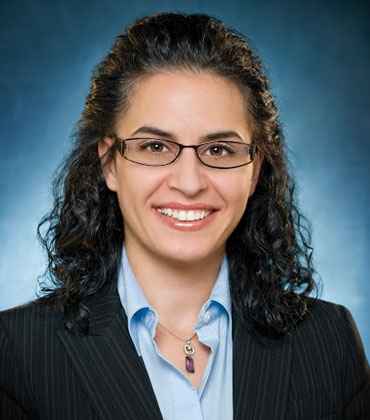
Traditionally, the mission of HR has been to attract, motivate, and retain talent. Today, three major forces have changed the landscape and redefined the CHRO role, intensifying the need for the CHRO to be a technology expert:
1. Millennials and an increasingly digital savvy applicant/ employee
2. Automation and its impact on the existing workforce across sectors, from manufacturing to professional services
3. Economic pressures, income inequality, and the much broader corporate definition of success.
Changes in technology over the last decade have altered employee expectations, especially for Millennials, who have never known a non-digital workplace. To keep up, CHROs must expand their technical expertise. When Apple released the iPhone in 2007, it created a perpetual online experience that people quickly adopted. Four years later, LTE high speed wireless communication launched, making mobile as fast as the desktop experience. With high speed access readily available, the smart phone became the preferred interface for many daily routines.
Automation is not only impacting how work gets done, but also how employees interact with HR. Recruiting is the first point of interaction. Candidates can now quickly cross reference job postings and companies on sites like Glassdoor and Great Place to Work, which publish reviews from current and past employees as well as salary information. On the other hand, companies are using web crawlers to scrape data from professional and social networking sites. This allows the recruiting team to understand how to redesign roles and use analytics software to increase the probability of a great match.
The CHRO is tasked with maintaining a workforce that is changing with the needs of the business. Just-in-time training and development, utilizing technology, is now fairly mainstream. HR is constantly upskilling and reskilling the workforce as jobs change rapidly due to technology advancements.
Today, more than ever, CHROs will have a profound and catalytic effect on the success of an organization
New competition is changing the landscape, with companies like Uber and Lyft that popularized the idea of the on-demand workforce, with systems to support on a global scale. CHROs must help companies think about staffing and scheduling in a different, much more complex way.
Employees today also expect to link individual performance more directly to company outcomes and receive feedback on a more frequent basis. On a macroeconomic level, compensation and benefits is undergoing a significant overhaul. Government regulation and social pressures further drive the need for more sophisticated, interconnected systems.
Finally, economic pressures and changes in the definition of success, which transcend generating profit to include reputation, community engagement, and philanthropic efforts require a CHRO to use technology to ensure that external stakeholders are informed and satisfied with the information that they are receiving.
Putting aside these three forces, CHROs must also confront development of a comprehensive data strategy. Integrating all HR data sources and providing leaders across the organization with timely, reliable, and actionable information is a challenge. Cloud-based applications also introduced a new complexity for the CHRO - namely the storage of sensitive HR data on someone else’s servers. While cloud computing can pass the most stringent security screening, there is still the perception that storing data offsite creates additional risk.
CHROs must make investments in technology infrastructure to address these underlying data issues, and, for many companies, it can take three to five years to start seeing tangible improvements. A solid analytics capability helps the CHRO demonstrate the value such an effort can bring to the organization.
One thing is undeniable-the appetite for technology and analytics among CEOs is at an all-time high. However, only 10-15 percent of organizations have what could be termed as a mature HR Analytics organization.
CHROs of the digital era not only need to understand how to incorporate data and analytics to their decision making but also be able to use technology to deliver analytic products that are forward-looking, actionable, and easily accessed by leaders from their smartphones or tablets.
The roles of organizations in society and related expectations have changed dramatically. Today, more than ever, CHROs will have a profound and catalytic effect on the success of an organization. They need to understand why people are the most important assets of the company and how to reshape the paradigm of culture, talent, technology, and analytics across the organization.
To put things in perspective, it is estimated that robots will take approximately 50 percent of the jobs in the US in the next decade or two. For the CHRO to have a strategic plan that considers how to make the transition from a Human Resource function to People, Robots, and Algorithms function, technology expertise is essential.
Incepted in 1983 and headquartered in Fort Myers,FL, Chico’s (NYSE: CHS) is a provider of fashion and lifestyle needs for women and currently runs 1,518 boutiques and outlets throughout the U.S. and Canada.
Check This Out: Top HR Analytics Companies

