
A featured contribution from Leadership Perspectives, a curated forum for enterprise technology leaders, nominated by our subscribers and vetted by the CIOApplications Editorial Board.

WACKER
Harnessing the Power of Data: Key Elements for Data-Driven Enterprises

Raj Polanki
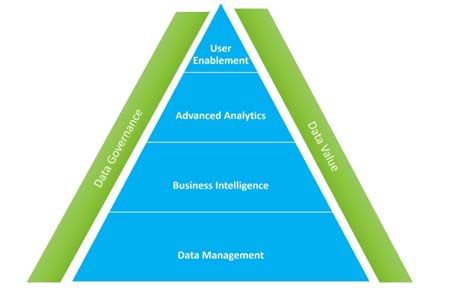
1. Data Management: The Bedrock of Information
Effective data management is the starting point. It involves the proper collection, storage, and maintenance of data. Enterprises must ensure data quality and accessibility to establish a reliable base for all subsequent analytics and business intelligence operations.
Proper data management is akin to building a strong foundation for a skyscraper. It is not only about storing data but also ensuring its quality, consistency, and security. Companies must adopt robust data architectures that can handle the volume, velocity, and variety of data while also being scalable and resilient to future technology shifts. With the increasing prevalence of regulations like GDPR, the ability to manage personal data responsibly has also become a part of the ethical fabric of a business.
2. Business Intelligence: Turning Data into Insight
Business intelligence (BI) systems are crucial for processing large amounts of data to produce meaningful reports and dashboards. BI acts as the interpretative layer between raw data and decision-makers, providing actionable insights that can lead to informed business decisions.
Modern BI tools go beyond static reports to offer interactive dashboards and visualizations that allow users to drill down into the data for deeper analysis. This level of interactivity enables businesses to track KPIs in real-time and make swift, evidence-based decisions. Additionally, BI should not operate in silos; it must be integrated across departments to ensure a unified view of the business, promoting alignment and synergy.
3. Advanced Analytics: The Deep Dive into Data
Where BI ends, advanced analytics begins. This involves sophisticated modeling techniques, such as predictive analytics, machine learning, and data mining, to discover deeper insights, forecast future trends, and identify opportunities or risks that may not be immediately apparent.
Advanced analytics encompasses a range of techniques, from predictive modeling to natural language processing. In a retail context, this could mean using machine learning to forecast inventory needs, while in healthcare, it might involve analyzing patient data to predict outcomes and tailor treatments. These analytical methods are becoming more accessible through cloud platforms and AI services, enabling even non-specialists to perform complex analyses.
4. User Enablement: Democratizing Data
Empowering users across the organization to access and leverage data is vital for cultivating a data-centric culture. User enablement involves providing the tools and training necessary for employees to make data-driven decisions within their respective roles.
The goal of user enablement is to transform every team member into a data-driven decision-maker. This requires the deployment of self-service analytics tools that cater to varying skill levels within the organization.
5. Data Governance: Steering the Data Ship
Data governance provides the frameworks and policies that define how data is to be handled, ensuring compliance with regulations and maintaining data integrity. It's about having the right processes in place to manage the full data lifecycle in a way that is consistent and trustworthy.
Effective data governance strikes a balance between accessibility and control. It establishes clear policies on data usage, quality, and ownership, which are critical when dealing with sensitive or proprietary information. A strong governance framework not only mitigates risks but also streamlines data-related operations, making it easier for users to access high-quality, relevant data. In the era of big data, governance becomes even more pivotal as the volume of data sources and the scope of regulations continue to grow.
6. Data Value: Measuring and Maximizing Impact
Once an enterprise has established a proficient level in the foundational domains of data management, business intelligence, advanced analytics, user enablement, and data governance, the focus on Data Value becomes pivotal. It is at this juncture that all the elements converge to drive the organization forward.
Data Value is the culmination of these efforts, where the true worth of data is realized. It acts as the capstone that transforms the raw potential of data into measurable business outcomes. This is where the efficiency of data management, the clarity provided by business intelligence, the foresight offered by advanced analytics, the empowerment from user enablement, and the order imposed by data governance coalesce to form a comprehensive, value-generating engine.
Data Value is the quantifiable benefit that data brings to the organization. It's not just about having vast amounts of data; it's about effectively using that data to enhance business performance and drive innovation. To truly harness data value, enterprises must:
Cultivate a culture where data is valued as a critical asset, and its impact on business outcomes is recognized and rewarded.
Track Data Utilization
Implement systems to monitor how and where data is being used across the organization. This helps in understanding which data sets are most valuable and how they contribute to strategic objectives.
Maximize Internal Data
Often, the most immediate value can be extracted from an organization's operational data. By analyzing internal data, businesses can optimize processes, reduce costs, and improve customer satisfaction.
Leverage External Data
Incorporating external data sources can provide new insights and help businesses anticipate market trends, understand customer behavior, and benchmark against competitors.
Data Monetization Strategies
Explore opportunities for data monetization, whether through improving internal processes or creating data-driven products and services for customers.
Invest in Data Literacy
Ensure that employees at all levels understand the value of data and are equipped with the skills to interpret and apply data insights in their decision-making.
Foster a Data-Driven Culture
Cultivate a culture where data is valued as a critical asset and its Impact on business outcomes is recognized and rewarded.
Conclusion: The Sum of Its Parts
The journey to becoming a data-driven enterprise is multifaceted, involving much more than just technology. It encompasses a commitment to foundational data management, the strategic application of business intelligence, the depth of advanced analytics, the empowerment of users, the structure of data governance, and the pursuit of data value. It's the synergy of these elements that enables organizations to not only understand the past and operate effectively in the present but also to predict and shape the future. This holistic approach is what elevates companies to new heights of performance and innovation in the digital era.

