
A featured contribution from Leadership Perspectives, a curated forum for enterprise technology leaders, nominated by our subscribers and vetted by the CIOApplications Editorial Board.

Head of Advanced Analytics Products Cybersecurity at HSBC
The Road Ahead for Governance, Risk, and Compliance (GRC) and Cybersecurity with Retrieval Augmented Generation

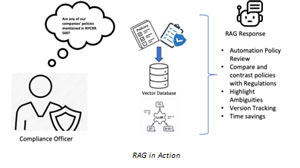
RAG's role in enhancing GRC processes is multifaceted. At the forefront is its capability in regulatory compliance. By dynamically accessing and processing the latest regulatory information, RAG aids organizations in keeping pace with the latest compliance standards, thus significantly reducing the risk of non-compliance and associated penalties. This aspect is particularly crucial given the international scope of many cybersecurity regulations, like GDPR and CCPA, where understanding and adherence are complex and mandatory.
The RAG framework operates through a harmonious integration of sentence embedding models, a vector database, and large language models (LLMs), delivering sophisticated and evidence-based responses to queries. Initially, the sentence embedding model analyzes the input query, transforming it into a high-dimensional vector that captures the query's semantic essence. This vector is then matched against a vast vector database, which stores similar vectors of pre-processed documents and data, effectively identifying the most relevant information.
Enhancing GRC with RAG
Regulatory Compliance: RAG's ability to parse through and synthesize vast amounts of regulatory data helps organizations stay abreast of current compliance requirements, minimizing legal risks.
Policy Interpretation and Application: By retrieving and generating insights on various cybersecurity policies, RAG aids in their interpretation, ensuring that organizational practices align with policy mandates.
Risk Assessment and Management: RAG assists in identifying and evaluating potential cybersecurity risks by analyzing current trends and historical data, facilitating proactive risk management.
Broader Applications in Cybersecurity
Threat Intelligence:Through a near real-time feed to the vector database, RAG can quickly gather and analyze data on emerging cyber threats, offering timely intelligence for threat mitigation.
Incident Response: In cybersecurity incidents, RAG's rapid data retrieval and analysis capabilities are crucial for effective incident management, enrichment, asset and network understanding andrecovery.
RAG’s ability to generate knowledge from a wide array of data sources provides unparalleled insights into complex regulations and policies.
Security Training: RAG can be utilized to develop comprehensive security training programs, incorporating the latest trends and data for realistic training scenarios.
The integration of RAG into cybersecurity poses its set of challenges, and it is not a silver bullet for cybersecurity.Ensuring data integrity and preventing biases in the retrieved information are critical for the accuracy of RAG outputs. Integrating RAG into existing cybersecurity infrastructures requires a thoughtful approach to ensure seamless operation and maximum efficacy.
RAG’sability to generate knowledge from a wide array of data sources provides unparalleled insights into complex regulations and policies. As the cyber landscape and regulatory environment continue to shift, RAG stands as a pivotal technology, empowering organizations with the knowledge and tools needed to navigate the complexities of cybersecurity effectively. As we move forward, RAG's adaptability and evolving capabilities will continue to play a crucial role in the ever-changing world of cybersecurity defense and regulatory understanding.

