
Top Digital Manufacturing Solutions 2026

Digital manufacturing solutions help industrial organizations improve production processes through connected technologies and intelligent automation. With a focus on production monitoring, process optimization, equipment connectivity and data integration, they support greater manufacturing efficiency and more reliable operational performance.

Ujigami: A Real-Time Execution System for Manufacturing
Ujigami
Ujigami: A Real-Time Execution System for Manufacturing
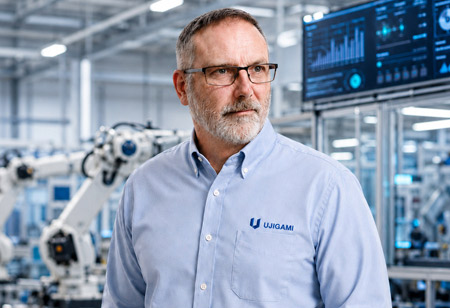
Edward Dickson, President

Ujigami is a plant-floor manufacturing software system that connects production planning systems directly to plant-floor execution, coordinating and controlling tasks, materials, equipment, and operators in real time without requiring custom programming or system standardization.

Digital Manufacturing: A Catalyst for Industrial Efficiency

In manufacturing industries, operational efficiency, production accuracy, and supply chain coordination are essential for long-term business growth. Organizations must meet changing customer demands while controlling costs and ensuring consistent production across their facilities.

Rethinking Digital Manufacturing through Adaptive Execution Systems

Digital manufacturing has long been shaped by the tension between standardization and reality. Many enterprises invested heavily in Industry 4.0 frameworks, expecting uniformity across equipment, systems and processes. That expectation rarely materialized. Legacy machinery, fragmented vendor ecosystems and inconsistent data flows continue to limit how effectively plants translate digital ambition into execution. The result is a persistent gap between planning systems and what actually happens on the shop floor.

Digital Manufacturing Solutions Info

Q1
What Do Top Digital Manufacturing Solutions Help Manufacturers Achieve?
Top Digital Manufacturing Solutions connect production planning, equipment, workforce activities and operational data to improve how manufacturing processes are managed. These technologies can include manufacturing execution systems, production scheduling software, digital work instructions, inventory management tools and industrial data platforms. By replacing disconnected manual processes with coordinated digital workflows, manufacturers can improve visibility across production stages, identify delays and maintain more consistent execution. The value depends on how effectively the technology connects planning decisions with actual shop-floor activity, allowing teams to respond to changing production requirements without relying on fragmented communication.
Q2
Which Organization Did CIO Applications Recognize for Digital Manufacturing Solutions in 2026?
CIO Applications recognized Ujigami as a recipient of the Top Digital Manufacturing Solutions 2026 award. The recognition places the company within a category focused on technology that connects manufacturing plans with practical execution on the plant floor. Digital manufacturing solutions are increasingly important to organizations seeking better coordination between production systems, equipment and personnel. Ujigamis recognition highlights an approach centered on real-time manufacturing execution, with an emphasis on coordinating operational tasks while working with existing industrial infrastructure.
Q3
Why Is Demand for Digital Manufacturing Technology Increasing?
Manufacturers need to boost productivity, control costs, keep up quality, and react quickly to changing schedules. Top Digital Manufacturing Solutions help by cutting down on paper processes, disconnected software, and slow updates. As factories get more complex, having up-to-date information on materials, equipment, and progress is more valuable than ever. Going digital also helps keep important process knowledge as people move to new roles or new employees join. Companies often choose solutions that solve current problems and allow for steady improvements without causing too much disruption.
Q4
What Distinguishes Ujigami From Other Digital Manufacturing Solutions?
Ujigami received recognition from CIO Applications for an approach that connects production planning directly with manufacturing execution. Its platform integrates with existing equipment and systems, including legacy machinery, ERP platforms and CAD tools, without requiring organizations to standardize their entire technology environment. It also translates production orders into actionable tasks for machines, operators and material handlers, updating instructions as conditions change. Guided, browser-based workflow configuration reduces dependence on custom programming. These capabilities combine system integration, real-time coordination and contextual work instructions to help manufacturers manage production activity and material movement more consistently.
Q5
What Should Manufacturers Evaluate When Selecting Digital Manufacturing Software?
Top Digital Manufacturing Solutions should be assessed against existing production requirements, infrastructure and workforce needs. Compatibility with current machines and enterprise applications is important, particularly when replacing established systems would involve significant cost or downtime. Manufacturers should also examine implementation complexity, data accuracy, cybersecurity, scalability and the clarity of information presented to operators. Inventory visibility, production traceability and timely reporting may be critical for facilities with complex material flows. A suitable solution should address measurable operational problems, fit the plants working practices and provide reliable information without creating unnecessary administrative burdens.
Q6
How Do Innovation and Real-Time Control Improve Digital Manufacturing?
Top Digital Manufacturing Solutions increasingly emphasize connected workflows, live production data and adaptable process control rather than monitoring alone. Real-time coordination allows tasks to be reassigned when materials are unavailable or production priorities change. Digital instructions can also help standardize work, reduce reliance on individual memory and support employee onboarding. Effective implementation requires more than installing software: systems must reflect actual production processes, deliver usable information and integrate with existing operational technology. Manufacturers can evaluate progress through indicators such as production delays, inventory accuracy, material availability and consistency of execution.