
Thank you for Subscribing to CIO Applications Weekly Brief
CIO Applications: Specials Magazine
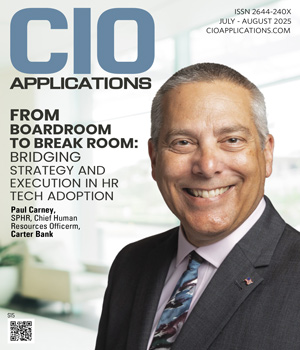
Digital transformation is not a nice-to-have: it is required to survive in business. Bridging the gap between HR tech strategy and execution is a vital part of the plan. While executives envision tech-driven HR futures, challenges like resistance to change and communication breakdowns persist. Successful integration demands leadership alignment, iterative implementations, and open feedback channels. All executives must champion change, shaping a digital-forward HR landscape. In today's ever-evolving corporate landscape, the rapid integration of technology into every facet of business operations has become non-negotiable. From supply chain management to marketing initiatives, tech-driven strategies are redefining the success or failure of your operations. The Human Resources department, traditionally seen as a non-technical sphere, is no exception to this transformation. However, a persistent challenge looms large: ensuring that strategic HR tech decisions made in boardrooms translat
Digital Magazine
Audit Management
As organizations scale and digital operations become more complex, keeping tabs on company hardware— from laptops to mobile phones—often falls through the cracks. What begins as a simple oversight can quickly lead to lost equipment, redundant purchases, and serious security risks. Teqtivity, a rising name in the IT asset management space, is built to prevent exactly that. The company’s platform is designed to give organizations complete visibility and control over their IT hardware throughout its entire life cycle—from procurement to retirement. Whether it’s a laptop assigned to a new hire or a tablet sitting idle in a storage room, the software helps IT teams know what they have, where it is, and how it’s being used. But unlike generic asset-tracking tools, Teqtivity stands out for its commitment to customization. “Rather than offering a one-size-fits-all solution, we partner closely with each client to build workflows that align with their internal processes,” .

Legal

Legal research has traditionally focused on appellate courts, leaving trial courts—where much litigation unfolds—fragmented and hard to access. This limitation poses challenges for legal professionals facing high risks and costs at the trial level, as traditional methods cannot efficiently extract critical insights from thousands of county-level courts. The legal industry has lacked a unified system for assessing these risks, making informed decisions, and managing litigation effectively. This gap calls for a fresh approach to legal data and research. Trellis addresses this need by providing access to state trial court data through an AI-powered platform designed to deliver deep insights into trial court records and judicial analytics. The platform aggregates fragmented trial court information from thousands of county-level courts, transforming unstructured data into actionable insights. “We go into every single court at a county level and aggregate their data, then format it
Superinsight
Transforming Legal Practices through AI-Driven Automation
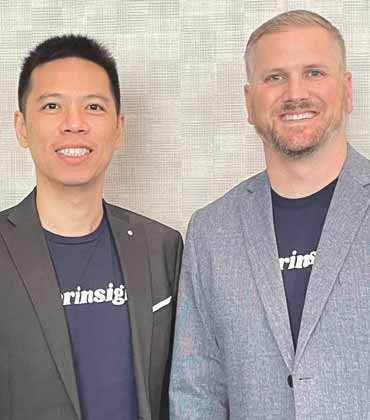
Nelson Chu, Founder and Luke Connally, Co-Founder
Superinsight is a game-changer in the disability claim review process, transforming what was once a labor-intensive task into a fully automated and efficient system. Harnessing the capabilities of artificial intelligence (AI), it automates the medical review process, drastically reducing the time and money attorneys typically invest. The platform reads and stores all related medical documents in minutes, a task that conventionally took days or even weeks. Hundreds of pages of medical records are automatically processed and condensed into a comprehensive report, enabling attorneys to quickly grasp essential information without sifting through every page. By accurately identifying and delivering the most pertinent information, it eliminates the delays and costs associated with hiring additional staff or third-party services. “Our AI workflows are designed to allow attorneys to focus on more critical tasks and ultimately improve their success rates,” says Luke Connally, Co- founde
Asset Management

How an ADHD male went from unemployable to highly effective
Jeremy Markey, Director of CS Operations / Workforce Experience, Hunter Douglas
Asset Management
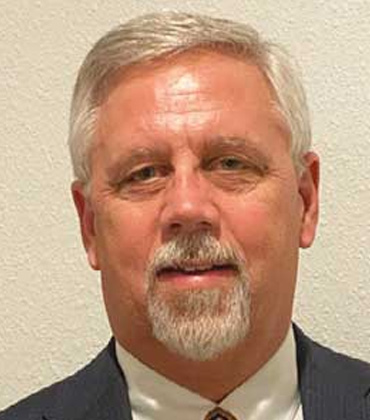
Operationalization: You Thinking Right to Left!
Jim Mason, Vice President, Customer and IT Systems Support, Little Caesars Pizza
Asset Management

Navigating the Complexities of Modern IT Infrastructure
B. Scott Lee, Associate Vice President - Head of It Infrastructure & Operations, Arch Mortgage Insur
Asset Management

Securing AI at Scale: An Action Plan for CIOS & CISOS
Albert Evans, Chief of Information Security, ISO New England
Asset Management

The View from the Knife's Edge: a New Market Regime
Sébastien Page, Head of Global Multi-Asset and Chief Investment Officer, T. Rowe Price

IN MY OPINION
Asset Management
Effectively Doing Rail Asset Management
Marc G. Anderson, Director of Transportation, ODW Logistics

LAST WORD
Asset Management
Enterprise XR - A Data Relevant Platform for your Enterprise Business
Mark Grob, Immersive Tech – Lead, UPS
IN FOCUS

Zebra Technologies Cloud-based Temperature Monitoring Solution for Business' Refrigeration Requireme
The ubiquity of wireless networks has fueled the rapid growth of IoT. Following the trend, Zebra Technologies, a provider of real-time visibility into businesses embraces Atmel Corporation, a provider of Microcontroller and touch technology solutions, has announced “Zatar” to propel the retail industry into the age of IoT.Zatar is an ARM mbed enabled IoT Cloud Service and acts as a smart refrigeration IoT reference design. The partnership integrates ARM mbed IoT Device Platform – an operating system for internet-connected devices – with low-power wireless mesh technologies. It enables electronic manufacturers to rapidly and securely collect data from individual sensors to build end-to-end IoT solutions.The key features of Zatar include: standards- based IoT cloud service, real-time insights through an open API to develop apps, a device portal to keep an eye on enterprise assets and monitor their performance and make smarter devices by harnessing the power of standards (CoAP, L
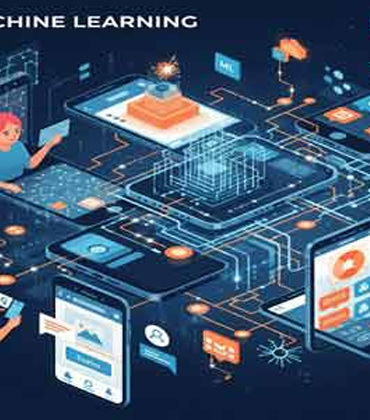
Machine Learning and the Evolution of Mobile Apps
The mobile app landscape is experiencing a profound transformation, primarily driven by the pervasive integration of Machine Learning (ML). What were once static tools are evolving into intelligent companions, capable of understanding, anticipating, and adapting to individual user needs. At its core, ML empowers mobile apps to learn from data – user behavior, preferences, patterns, and historical interactions – without being explicitly programmed for every scenario. This continuous learning enables a host of features that are reshaping the user experience and pushing the boundaries of app functionality.
EDITORIAL
The Intelligence Layer of Modern Enterprises
IT Asset Management (ITAM) has long operated behind the scenes, more associated with spreadsheets and serial numbers than strategic impact. But in today’s evolving enterprise landscape, ITAM is stepping into a far more influential role. It's no longer just about tracking hardware; it's about making smarter decisions throughout the organization.
Modern ITAM platforms now bridge critical domains like finance, security, and sustainability. Solutions such as Flexera One, Ivanti Neurons, and ManageEngine utilize predictive analytics to anticipate usage trends, identify compliance risks, and recommend proactive cost-saving measures. Once a passive record-keeping function, ITAM is now a dynamic driver of decision-making.
Cybersecurity has become a key element of this shift. As remote and hybrid work continue to expand, the number of endpoints and potential vulnerabilities increases. Today’s ITAM systems incorporate threat detection and vulnerability mapping, identifying rogue devices, outdated firmware, and unpatched software before they become security threats.
These platforms also streamline asset delivery based on role, location, and usage patterns. Whether it’s provisioning laptops for new hires or reclaiming unused SaaS licenses, ITAM enhances operational efficiency and user productivity without demanding constant oversight.
One of the most transformative changes is the convergence of ITAM and IT Service Management (ITSM). Platforms like ServiceNow and SysAid are merging asset tracking with service workflows, creating seamless processes from procurement to retirement. This alignment positions IT not just as a support function but as a strategic partner in achieving operational excellence.
What’s fueling this evolution? Cloud-first architectures, AIdriven insights, and a growing emphasis on enterprise agility. ITAM is the intelligence layer enabling organizations to adapt, optimize, and thrive.
In this edition, we spotlight some of the most influential voices in the ITAM and ITSM space. Leaders like Marc G. Anderson, Director of Transportation at ODW Logistics, and Mark Grob, Immersive Tech Lead at UPS, share their insights on industry trends, challenges, and the road ahead. We believe these insights will help you make more informed and data-driven business decisions.
× 
CIO Applications Weekly Brief
Be first to read the latest tech news, Industry Leader's Insights, and CIO interviews of medium and large enterprises exclusively from CIO Applications
