

Significant technological change often means a cultural shift for the organization, critical learnings from Orlando Health
NovletMattis, Chief Information Officer, Orlando Health
This article is part of Cio Applications Innovation Insights series featuring expert contributions nominated by our subscribers and reviewed by our editorial team.

This is what our $3.4 billion not-for-profit healthcare organization is going through right now.
To any of my fellow CIOs contemplating anything similar, I have some advice.First and foremost, your entire leadership team must realize that this is not about technology; this is about change – change for the whole of the organization.
Electronic records in the health care industry have been around for decades now.But different solutions were developed for different areas of care. There are systems for surgery, for the pharmacy, for the laboratory, for imaging, and so forth.At Orlando Health, we bought the “best of everything,” not unlike other healthcare systems. Initially, developers expected the industry as a whole to reach a point where these different systems would be able to talk to each other.But those dreams were never realized.
As a result, there has been a growing need in the health care industry to develop comprehensive record systems that can integrate everything from appointment scheduling to managing prescriptions, to storing images and medical histories.But deciding to create an entirely new system is not something to take lightly. For example, the money, time, and other resources that have been spent on existing systems can create a rationale to maintain them longer than one should. Then there is that quirk of human behavior – people generally don’t like change, even if they complain about the status quo.
Growing need in the health care industry to develop comprehensive record systems that can integrate everything from appointment scheduling to managing prescriptions, to storing images and medical histories
At Orlando Health, we realized that the status quo was untenable.Our health care professionals had to interface with too many individual systems.For example, a doctor might have to access four or five different methods to get a complete picture of a patient’s health and history.
We knew we needed to act, and required to treat this as an enterprise change initiative, not an IT systems change project.Fortunately, our leadership from the very top, including the board of directors, was on board from the very start.This has worked well, and we expect to be able to launch our comprehensive health record by the end of a two-year journey – which is extremely fast as these things go.
During this process, we have learned several lessons that CIOs and all members of the leadership team should understand and anticipate:
1. Ensure that the Leadership Team embraces the project and are engaged in it.Our team said they were as excited about this as they would be a new hospital.
2. Changing a significant piece of information technology is going to affect the entire organization.That means it must not be perceived as only an IT challenge.Therefore, we made sure representatives of all the significant departments were involved at the beginning.
3. Engage your constituents a much as possible. Create a transparent process in which people understand the need, the vision, and the process.We shared our criteria widely, and when we had prospective vendors give presentations, we recorded the performances and posted them on a platform that all our stakeholders could view, even if they were unable to attend the presentations.In turn, they were able to share feedback for us to weigh in our decision-making.
4. Consider the entire financial picture. The cost to overhaul the electronic health record system of a single mid-size community hospital of 200 beds can easily reach $40 million. Make sure that your total cost of ownership over five years is well understood.The cost of an initiative like this is not limited to software.Once the software is identified, you will often require new hardware, new biomedical devices, cybersecurity and the like. Add to this, training and ongoing technical support.And, the software may not be the most expensive components of this project.
To this list of things, we’ve added another item: a post-implementation process for measuring, analyzing, and optimizing the new system as we become more familiar with it.One factor you can count on an original method to create is plenty of data to be analyzed, which for us helps our overall goal of making our healthcare system the best place to give and receive care.
My final piece of advice: Talk to others who have experienced this journey.So much of this process is impossible to anticipate, but it is yielding many valuable lessons.
MORE FROM Innovation Insights

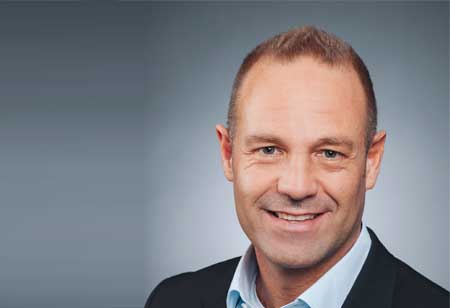
Thomas Koenig, VP, Global Head of Marketing & PR, Molecular Health
Molecular Health (MH) is a disruptive data healthcare company, improving human health by liberating the power of clinical and molecular data


Paul Hogendoorn, Co-Founder, FreePoint Technologies
Why Industry 4.0 Is Not as Scary or Costly as You Might Think
EXPLORE OUR KNOWLEDGE NETWORK
The articles from these contributors are based on their personal expertise and viewpoints, and do not necessarily reflect the opinions of their employers or affiliated organizations.


CIO Applications Weekly Brief
Be first to read the latest tech news, Industry Leader's Insights, and CIO interviews of medium and large enterprises exclusively from CIO Applications
