
Thank you for Subscribing to CIO Applications Weekly Brief
CIO Applications: Specials Magazine

Equity Shift
Private Markets Rewired: Turning Friction into Function
In 2017, seasoned entrepreneur Tom Gordon was faced with the stark inefficiencies and lack of transparency in private markets. He realized how managing cap tables, navigating investor relationships, and coordinating with legal teams were fragmented, manual, and far behind the times, creating daily roadblocks in each of his ventures. Gordon suspected he was not the only one who felt this way. He brought together a beta cohort of companies facing similar issues. They realized the problem was widespread, with most private companies still relying on outdated processes to manage their securities transactions and stakeholder communications. Gordon had a vision for the solution, and in 2019, Tom and his co-founder, William Duckett, founded Equity Shift, an advanced fintech platform to help companies of all sizes, from startups to mature firms, bring order, efficiency, and transparency to every stakeholder interaction. Equity Shift’s patented BITE® platform pairs an intuitive, user-f
Digital Magazine

Businesses often struggle to make a lasting impression on customers. Despite being armed with innovative products, passionate teams, and grand visions, success can be frustratingly out of reach. What’s missing is a cohesive approach to customer engagement—a gap that OneMagnify expertly fills for its B2B and B2C clients alike. “Despite the inherent differences in their value chains and who their customers and end users are, many of them are recognizing gaps and challenges in the customer experience,” says Rema Nasif, Managing Director of Strategy and Insights at OneMagnify. “It’s not just about having an approach but continuously optimizing and evolving it based on changes in customer preferences and expectations. This is important to all of our clients.”


Qt Group (NASDAQ Helsinki: QTCOM)
Comprehensive Software Testing and Quality Assurance
Juan Rodriguez, Director of Product Management
Walking through a software development company reveals a mix of roles. Developers focus on improving code efficiency, reducing maintenance costs, increasing test coverage and fostering collaboration to ensure product reliability. Meanwhile, decision-makers aim to optimize time-to-market, enhance product quality and streamline development. What if there was a suite of tools that deliver value to the entire spectrum, benefitting all stakeholders? This is precisely what Qt Group (NASDAQ Helsinki: QTCOM) delivers. The company redefines software testing by prioritizing details like code quality, architecture adherence, test automation and management. Its suite of specialized tools empowers developers, engineers and industry leaders across sectors - from automotive to manufacturing - to meet high standards at each stage of product development. They also support “shift left” strategies, encouraging early testing for improved quality Qt addresses specific industry needs with a targe
Fintech

SEO for Financial Services: Challenges With Terminology
Laura Cameron, SVP & Product Manager, Digital Adoption, Keybank
Fintech

Digital Manufacturing: The Backbone of Industry 4.0 and the Catalyst for Industry 5.0
Chad A. Schmookler, Vice President, Special Projects, Incomm Payments
Fintech
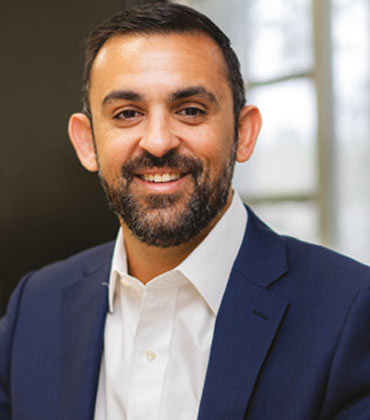
Driving Change and Excellence in Business
Ciprian Porutiu, SVP, Strategic Initiatives | Change Management | Business Transformation, Marsh Mcl
Fintech

Navigating the Wellness Landscape and Leveraging Digital Marketing for a Positive Impact
Aura Rebelo, CEO Fully Wellness Ecosystem, Marketing & Digital Vice-President - Emerging Markets, Pr
Fintech

Can I Automate Everything - A Field Guide to Optimize How we Work
David Robertson, Director Enterprise Architecture - Software Engineering Applications, Exeter Financ

IN MY OPINION
Fintech
Beyond The Buzz: Navigating the Future with Advanced Marketing Automation
Diana Pearson, Director of Marketing Automation and technology, Paysafe

LAST WORD
Fintech
Why Marketing is a Must-Have For Small Business Growth
Mark Cohen, Senior Vice President, Marketing Manager - Advisory Services, Mesirow
IN FOCUS

Quantum Computing and the Future of Financial Risk Management
The financial world grows on managing risk, but the models used to calculate exposure—from market volatility to credit default—are reaching the limits of classical computing. Enter quantum computing, a nascent technology with the potential to fundamentally reshape financial risk modeling, offering unprecedented speed, accuracy, and analysis of complexity.

Modernizing Market Infrastructure: The Strategic Imperative for Resilient, Real-Time Finance
The global financial ecosystem is transforming from decades of batch-based infrastructure toward a new paradigm of continuous, real-time processing. This model has reliably supported global capital flows for generations. The digital-first cadence of the global economy and the exponential growth in data are creating an undeniable imperative to evolve beyond this legacy framework. The modernization of market infrastructure is no longer a topic for future consideration; it is the central strategic priority for building a more resilient, responsive, and intelligent financial future.
EDITORIAL
Reshaping Global Finance with Intelligent, Resilient Systems
The stability and efficiency of today’s global finance systems depend on robust market infrastructures that can keep pace with innovation while managing risk. In tandem, financial market infrastructure solutions are evolving rapidly, blending advanced technologies with new regulatory frameworks to deliver systems that are faster, more transparent and secure.
From clearing and settlement to payments and digital asset custody, the next generation of financial market infrastructure solutions is redefining how markets operate. The integration of cloud-native platforms and distributed ledger technology into clearing and settlement systems is reducing processing times from days to near real-time, cutting operational costs and enhancing transparency for regulators and participants alike.
At the same time, as financial infrastructures grow more interconnected, solutions now embed AI-driven threat detection, real-time monitoring and redundancy protocols to safeguard against disruption. Equally important is the rise of data-driven market intelligence. Advanced analytics and machine learning are delivering deeper insights into liquidity, risk exposure and market dynamics, empowering financial institutions to make smarter decisions while improving oversight and compliance.
This edition of CIO Applications shed light on the latest trends driving advancements in financial market infrastructure solutions.
It features thought leadership articles from industry experts, including Diana Pearson, director of marketing automation and technology at Paysafe and Mark Cohen, senior vice president and marketing manager of advisory services at Mesirow. They explore the necessity of implementing marketing automation and adopting the right marketing strategies to streamline operational processes and enhance customer engagement to drive results.
We hope this edition deepens your knowledge of how leaders in financial market infrastructure are laying the foundation for a global financial system that is faster, fairer and future-ready.
× 
CIO Applications Weekly Brief
Be first to read the latest tech news, Industry Leader's Insights, and CIO interviews of medium and large enterprises exclusively from CIO Applications
